
Trauma-informed psychotherapy & counselling
A compassionate online therapy that combines Internal Family Systems & EMDR - an embodied trauma-focused approach

About Johnnie Taylor
From Surviving to Thriving
Johnnie Taylor is an accredited, trauma-informed psychotherapist offering compassionate trauma-focused therapy in Canterbury and online worldwide. He can help you with complex trauma and emotional burdens that can hijack your nervous system and erase your sense of Self
Integrating Internal Family Systems (IFS) and Eye Movement Desensitization and Reprocessing (EMDR), Johnnie provides a compassionate, body-oriented approach to healing. He integrates EMDR, stabilisation, resourcing, psychoeducation, imaginal exposure. And with IFS, he helps you befriend 'parts' of your nervous system bringing a more creatively adaptive & safe response to adult life.
The practice supports adults navigating complex psychological trauma, PTSD, C-PTSD, childhood neglect, abuse, bullying, anxiety, chronic stress, triggering, fears, phobias, people-pleasing, depression and relationship difficulties. Please make contact, in confidence, to discuss how he might help with any problem you might have.
Rather than managing symptoms, trauma-informed therapy focuses on understanding protective parts and processing traumatic memories to restore nervous system regulation, restore safety and facilitate healing and recovery. This therapy focuses on preventing self-abandonment and moving from performance to presence.
Johnnie's background is in the NHS as a clinical nurse specialist in liaison psychiatry. This experience informs how he helps with complex conditions: ADHD, OCD, body dysmorphia, somatic pain, chronic fatigue, rage, shame, self-abandonment, DID, neurodivergence and psychiatric conditions. This is without any labels, judging or invalidating you, or getting adversarial in a psychoanalytic way; or by 'putting on a white coat'; or intellectualising endlessly.
Beyond the IFS and EMDR trainings, Johnnie has had further training in attachment-informed EMDR and IFS-informed EMDR. Attachment informed EMDR allows you revisit developmental, childhood and attachment issues: which may affect your adult relationships. We can retrieve and recover your inner child - and restore your authentic Self.






I am a registered member of the BACP, IFS Institute, IFS UK, NMC, and EMDR Europe and EMDR Association UK. I have full DBS clearance and public liability insurance.
Integrating trauma-focused therapies for you
Internal Family Systems
IFS helps you get to know how your nervous system adapted to challenging situations, and how these adaptations became 'protective parts'. In this way you may feel wrong, abandoned, shamed, anxious, worried, hopeless, lonely, and maybe lacking a secure sense of self. Rather than trying to remove these parts, can develop a compassionate, healing relationship with them. Instead of judging yourself, we can befriend and unburden your nervous system of fear and trauma.
EMDR
Eye movement desensitization and reprocessing therapy, commonly known as EMDR, is a mental health therapy method to treat the emotional impact of trauma. EMDR helps reprocess active symptoms caused by adverse situations. EMDR best known for its role in treating post-traumatic stress disorder (PTSD), but its use has expanded to include treatment of many other conditions. EMDR does not require you to talk through everything in detail. We add bilateral stimulation and stabilisation in your sessions.

Attachment-focused EMDR
Attachment-focused EMDR integrates an IFS-informed understanding of early relational trauma with the processing power of EMDR. It allows us to revisit past attachment experiences — the ways you learned to feel safe or unsafe with others — and recover what was lost or never fully formed in childhood. Using imaginal techniques we can repair, retrieve and rescue your inner child. In this way, we can reconnect you with lost or abandoned aspects of yourself.
More about Ai-EMDR“The effects of trauma are stored in the body. Until they are addressed there, words alone are not enough.”
Information and FAQ
See all FAQsFree initial appointment
Yes. I offer a free, confidential 30-minute appointment on Zoom so you can ask questions and get a sense of my approach before deciding whether to begin. We can also talk on the phone, using Whatsapp or whatever platform suits you. The sessions can be daytime or evenings. Some people prefer being outside of the house, perhaps in a car, and this is fine. Your safety is paramount. Please check other crisis resources.
How much does it cost?
Sessions are normally from £100 for 60 minute sessions depending on times and space available. I offer 90 minute sessions from £140.
Evenings and Saturday clinic — fees vary slightly according to space.
Students, trainee counsellors, and people on reduced incomes — reduced fees available, subject to space available.
For EMDR Intensive sessions please make contact for more information.

How do online sessions work?
Sessions are 60 minutes and take place on Zoom or a similar platform like Bilateral Base. You will need a private space where you feel comfortable. Some people prefer longer sessions of up to 90 mins.
Sessions generally move through several stages: building a picture of your history and what you want to work on; noticing parts as they show up in the body or in feelings; getting to know those parts with curiosity; and, over time, deeper work with the parts that are ready for it.
“Trauma is not what happens to you. Trauma is what happens inside you as a result of what happens to you.”

About Johnnie Taylor

I'm Johnnie Taylor, a trauma-informed psychotherapist with extensive clinical experience in the NHS and privately.
My approach is informed by Internal Family Systems, EMDR and body-oriented approaches to trauma. I'm trained to Level 3 with the IFS Institute & IFS UK. I have practiced in the National Health Service since 2003 in mental health settings.

I'm dual-trained and also accredited with the EMDR Association UK & EMDR Europe. I have also completed trainings in IFS-informed EMDR & Attachment-informed EMDR.
I have an MSc from Kings College London and the University of Kent. I also have a Postgraduate Diploma from Goldsmiths College, University of London. I originally trained as a journalist at CIty University London.
For many years i was a candidate with IGAP - a London-based training in Jungian Analysis. I was a clinical nurse specialist and crisis team manager in the NHS.
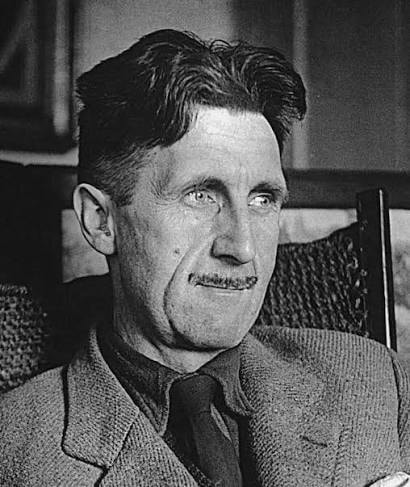
I'm also a judge on for the Orwell Society's Dystopian Fiction Prize. I admire the work of George Orwell and also Carl Jung and can see how stories heal and often these inner stories require resolution and individuation.
Registered & accredited with

What people say
See all testimonialsEugene (Oct 2026)
"Doing therapy with Johnnie has been very helpful. He is empathetic, skilled, and can switch between different modalities. Working with Johnnie helped me to regulate my nervous system better, as well as to address some of the deep-seated issues that needed working through. I would highly recommend his therapy services, especially if you're looking for a mix of body-based approaches, such as EMDR and IFS."
Community CMHT case
"Johnnie, I am writing to you because I did not say thank you for your help. You have a calm voice and a relaxed and friendly manner, which made you an easy person to talk to, working through problems. I hope you help many people in the future."
GP practice patient
"Dear Johnnie, Thank you for understanding, acceptance, kindness and help. This has meant I have been able to explore my life honestly with you. Thank you for everything — I will miss you and wish you every happiness and contentment in your life."
Make contact
If you’re considering trauma-informed therapy, please send a confidential email.
You can also send a WhatsApp message in confidence to +44 7525 456544.
Registered & accredited with
Practicing online from Canterbury
Heaton Road, Canterbury, Kent, CT1 3PY
- Trauma and PTSD
- Complex trauma (C-PTSD)
- Childhood trauma and adverse experiences
- Abuse, neglect, erasure, abandonment
- Anxiety, hypervigilance, flashbacks
- Depression and low mood
- Anger, resentment and feeling hostile
- Loneliness and feeling unlovable
- Chronic stress and burnout
- Relationship incapacity
- Attachment and abandonment issues
- Family scapegoating and emotional abuse
- Low self-esteem, poor confidence
- People-pleasing, shrinking and codependency
- Dissociation, DID, loss of identity
- Grief and hopelessness
- Life transitions and work issues
- Difficulties arising from narcissistic or controlling relationships
- Chronic fatigue and the emotional impact of long-term health difficulties
- Somatic conditions related to emotional problems, including pain and eating problems, dependency